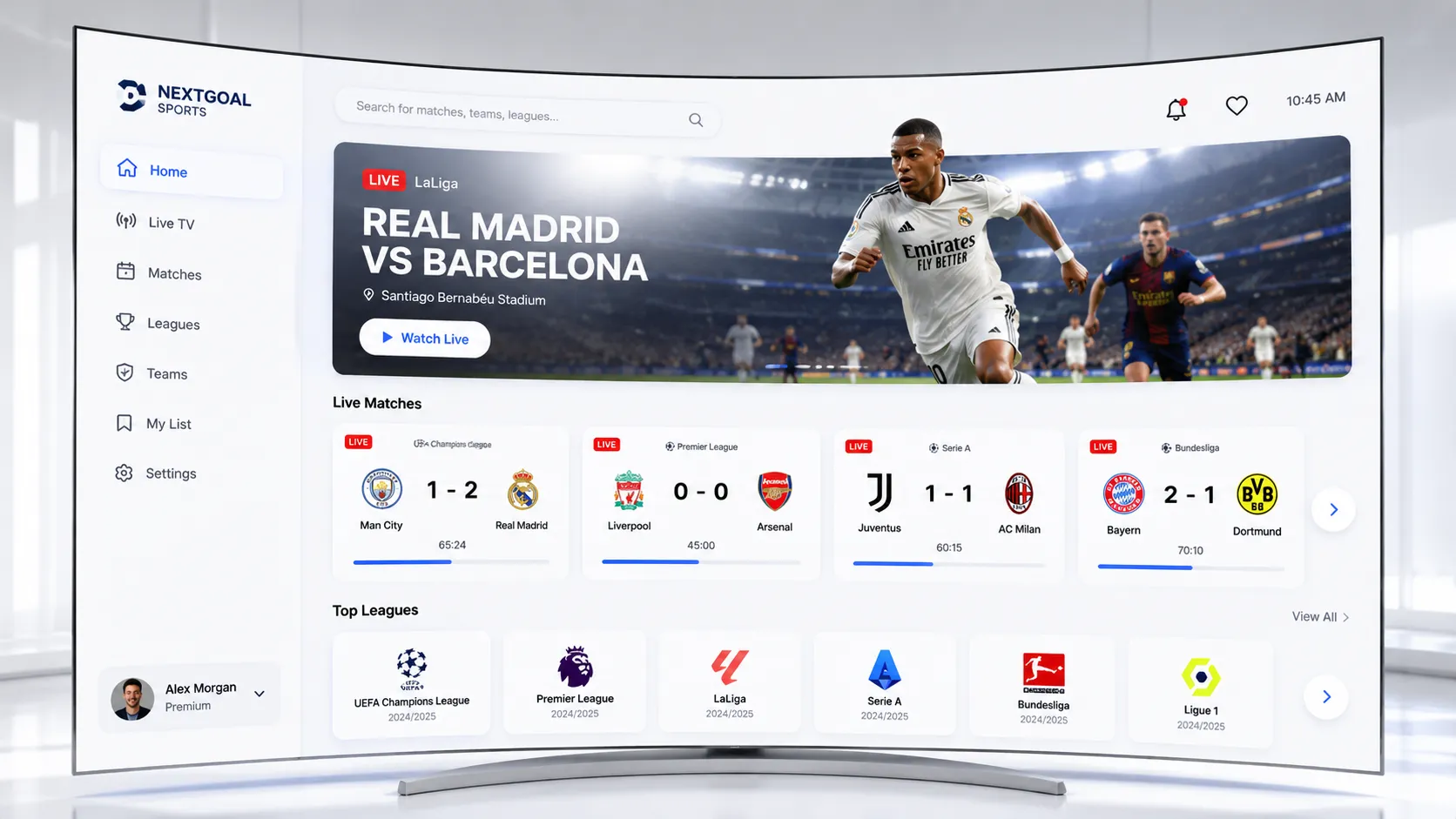
IPTV Technology Is Legal — Content Rights Are What Matter
Internet Protocol Television (IPTV) is a content delivery method — the same fundamental technology used by Sky, BT Sport, Hulu, Sling TV, and dozens of other licensed broadcasting operations to deliver their programming. The technology itself has no inherent legal status one way or the other. It is a neutral delivery mechanism.
What creates legal exposure is distributing or accessing copyrighted content without appropriate authorization. When a provider distributes channels they have not licensed — Premier League football, NFL games, HBO content — without holding the relevant broadcast rights, they are operating in violation of copyright law in most jurisdictions. In the USA, this falls under the Copyright Act; in the UK, under the Copyright, Designs and Patents Act 1988 and the Digital Economy Act 2017; in France, under the Code de la propriété intellectuelle; in Morocco, under Law 2-00 on copyright.
The practical implication for subscribers is this: the IPTV player app on your Firestick is legal. Subscribing to a service that holds proper broadcasting rights for the channels you watch is legal. Subscribing to a service that distributes those same channels without authorization is not protected, and in the USA and UK especially, subscriber-side exposure has become a real if secondary concern as enforcement has matured.
IPTV Legality by Region: USA, UK, France, and Morocco
United States. The USA's copyright framework under the Digital Millennium Copyright Act (DMCA) and the Copyright Act makes unauthorized distribution of copyrighted content clearly illegal. Rights holders — sports leagues, broadcasters, studios — actively pursue unauthorized IPTV services operating in the USA market. Enforcement has primarily targeted operators, but subscribers are not categorically protected. The FTC has also become more active in addressing deceptive subscription practices, including misleading claims about content authorization.
United Kingdom. UK enforcement has been among the most active globally. Rights holders including Premier League, Sky, and BT have successfully secured court orders against unauthorized IPTV services and obtained subscriber data in some investigations. Ofcom's regulatory framework adds a second layer of oversight beyond copyright enforcement. Subscribers in the UK using unauthorized services face greater practical risk than in most other markets as of 2026.
France. ARCOM (formerly HADOPI and CSA) oversees audiovisual content regulation in France, with an established graduated response framework for copyright infringement. French-language content is subject to specific protections under the Code de la propriété intellectuelle, and rights holders have been increasingly active in pursuing unauthorized IPTV distribution targeting the French market.
Morocco. Copyright protection in Morocco is governed by Law 2-00, which provides protections broadly consistent with WIPO treaty obligations. Enforcement capacity is less developed than in the EU or USA, but the legal framework protects rights holders and this is an evolving area. Moroccan subscribers should apply the same evaluation standards to providers as their counterparts elsewhere: ask about authorization and choose providers with transparent licensing positions.
Looking for a Transparently Authorized IPTV Service?
Message us on WhatsApp. We connect viewers with providers who operate transparently and offer trial access so you can verify quality before committing.
How to Evaluate a Provider's Content Authorization in 2026
Directly assessing a provider's content authorization status is not straightforward — most providers will not share their specific licensing contracts, and there is no public registry of authorized IPTV services that subscribers can consult. However, there are concrete questions you can ask and observable signals you can evaluate during a trial period.
Ask the provider directly about their licensing position. A question as simple as "How is your service authorized to distribute the channels you carry in [your country]?" will receive meaningfully different answers from legitimate providers versus those operating without proper authorization. A legitimate operation can describe their arrangement at a high level — the nature of their content rights, which markets they cover, and how their service complies with local regulations. A provider who deflects with marketing language, claims universal legality without qualification, or simply doesn't respond to the question is providing a telling signal.
Evaluate operational professionalism as a proxy. Providers who invest in proper content authorization also tend to invest in other areas: accurate EPG maintenance, responsive customer support, transparent billing terms, and robust server infrastructure. The correlation is not perfect, but operational quality is a meaningful proxy for authorization discipline. A service that cannot maintain accurate EPG data or respond to basic support questions rarely has robust content licensing arrangements.
Be skeptical of extreme pricing relative to claimed features. A properly licensed IPTV service bearing the cost of broadcasting rights, CDN infrastructure, and ongoing operations has a realistic cost floor. Pricing that doesn't plausibly cover those costs indicates something is absent — most often content authorization. This is not a definitive test, but implausibly low pricing for an extensive licensed channel lineup warrants additional scrutiny.
For the practical evaluation framework that includes authorization assessment alongside technical quality criteria, see our comprehensive IPTV providers comparison guide.
How to Use IPTV Services Safely and Responsibly
Choosing an authorized IPTV service is the primary risk-mitigation step. Beyond that, several practical guidelines apply to any IPTV subscriber regardless of their provider's authorization status.
Understand your subscription's billing terms. Subscription auto-renewal, cancellation policies, and what constitutes a breach of terms should be understood before payment. Some providers include terms that limit what content you can access from specific locations — reading these before subscribing prevents surprises.
Do not share credentials. Sharing IPTV login credentials with people outside your household typically violates provider terms of service and may have implications under applicable law depending on the nature of the content and jurisdiction. Stick to the simultaneous connection limit your plan includes and use it only within your household.
Stay informed about enforcement developments in your region. Copyright enforcement activity has intensified in 2026, and the regulatory landscape continues to evolve. Periodic awareness of developments in your jurisdiction helps you make informed decisions about the services you use.
Frequently Asked Questions
Find a Transparently Authorized IPTV Service
Message us on WhatsApp with your region and viewing needs. We will connect you with providers who operate transparently and arrange a trial so you evaluate quality before subscribing.